
 I remember my mother telling me about an activity she planned with her creative writing students: she had them compose their six-word-memoirs. Her memoir, in seven words, went like this: still trying to run away from home. My mother was single. Single as a result of divorce, and then by choice. She never re-married. From August to May she taught English to high school students. I do not remember her reading much during the school year. As I think about my own teaching practice, I can understand why. From May to August she read in between watering plants and transplanting azalea bushes or monkey grass from the front yard to the back yard, and sometimes back again. In high school, as during the rest of my adolescent life, I lived with my mother. In my fourth year of Latin, during my junior year, I translated one of the first stories that we studied from real Latin. The story came from Ovid’s Metamorphoses: the story of young lovers Daphne and Apollo.
My fascination with Latin did not come from learning all the declension endings, different verb tense endings, or figuring out the formulaic way in which to put together a translation of a sentence from Latin into English, where the word order from each is jumbled. What did it happened later, once all the work of learning the language, all the vocabulary and grammar, was at least partly underway. In the story of Daphne and Apollo, the nymph, Daphne, tries to escape the love-struck Apollo, who is in hot pursuit. She runs and runs and prays to her father not to be caught by Apollo, while Apollo chases her and lists all of the reasons why he is a perfect mate and why she should stop! and marry him. With the help of my Latin dictionary and my meager vocabulary from the first three years of a language in high school, I translated all of the story that was assigned.
There were things happening in the language that I had never known could happen in the English language, but which I was told later could happen: things like interlocked word order and chiasmus, which created powerful images in the text, and which were created purely with words on the page. These can occur easily in Latin because word endings allow for some flexibility in the ordering of sentences. We discussed the story. At the end of the story, Daphne’s wish is granted: her father turns her into a tree. Just when you think that everything is going to be fine, and Apollo might just stop his pursuit and leave the poor woman alone, he proclaims that Daphne will be his tree. This story is the story of the origin of the laurel tree: the tree that becomes the one associated with Apollo. So it gives us the origin of something, but it also gives us the origin of this particular story. A woman is chased by a man. And she doesn’t get away. Or she does. In Ovid’s story, she is changed by the situation, physically. Today we might be more ready to discuss the emotional changes of her character. There are different ways to look at it. This story was the beginning.
When I think of the story of Daphne and Apollo, I think of my mother. She is rooted to so many things, a job, a house, friends, and children. Stories from long ago turn up in everyday life. And I suppose the difference with my mother is that, while she wants to liberate herself from some ties, she is making a choice to stay and be a part of our lives, while others (Daphne, etc.) do not have a choice. And- leaving was what my father did. Apollo, the pursuer, the god and the one who desires to own the woman Daphne cannot realistically sustain himself in my mother’s world. Or in mine for that matter. Although I know that he exists still today because I have met him, and have friends who have met him.
This is just one story. One story that suddenly, magically, spoke out loud to me. By the time I was sixteen, I knew about the Aeneid already: the journey, the quest. But there were more: more stories that showed up again in different forms and in different voices that kept me retracing my steps back to Ovid. There were other stories to explore and see where they could be situated in my life, in the lives of those around me.
The story of Jupiter and Io goes like this…
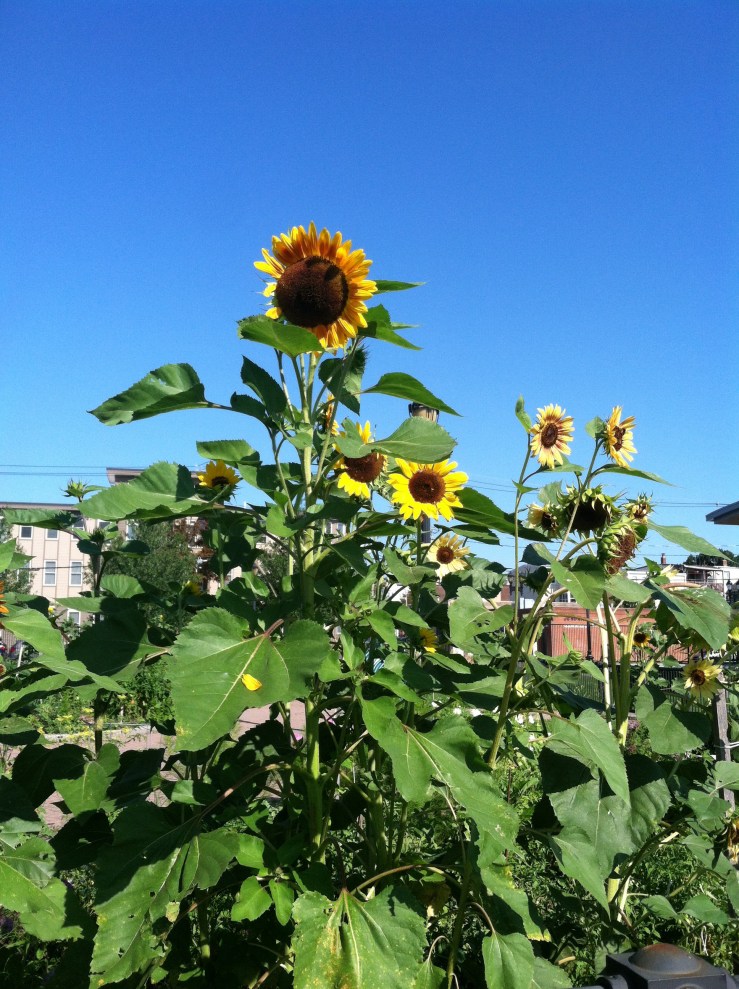
(Photograph taken by me: East Boston, MA)

 Alexandra Sladky
This is awesome!
LikeLike